

On Tuesdays, my son and I (and lately my husband’s aunt) go for some bubble tea and then do all the grocery shopping for the week. It is kind of a routine we have that was born out of playing Spotlight Hours in Pokémon GO and has evolved into something else… and it is our way to bond a little as a family.
Being a Millennial parent means we connect in particular ways. For example, now that there are no longer Spotlight Hours, we simply sit down and watch memes on Reddit (clarifying that my Reddit feed is pretty safe for work and no minors are being exposed to the ugly side of Reddit) or videos on either TikTok or IG… and why am I telling you this? Because yesterday, particularly while we were sharing memes and videos, a video came up on Auntie’s screen: it was a group of kids playing on a dirt field… with a mini tornado. And yes, I immediately recognized it as AI for multiple reasons (starting with the fact that who the hell plays with a tornado?)… and had to explain to her that the video was AI, while she tried for a bit to justify it: “maybe those kids are used to playing like that…”
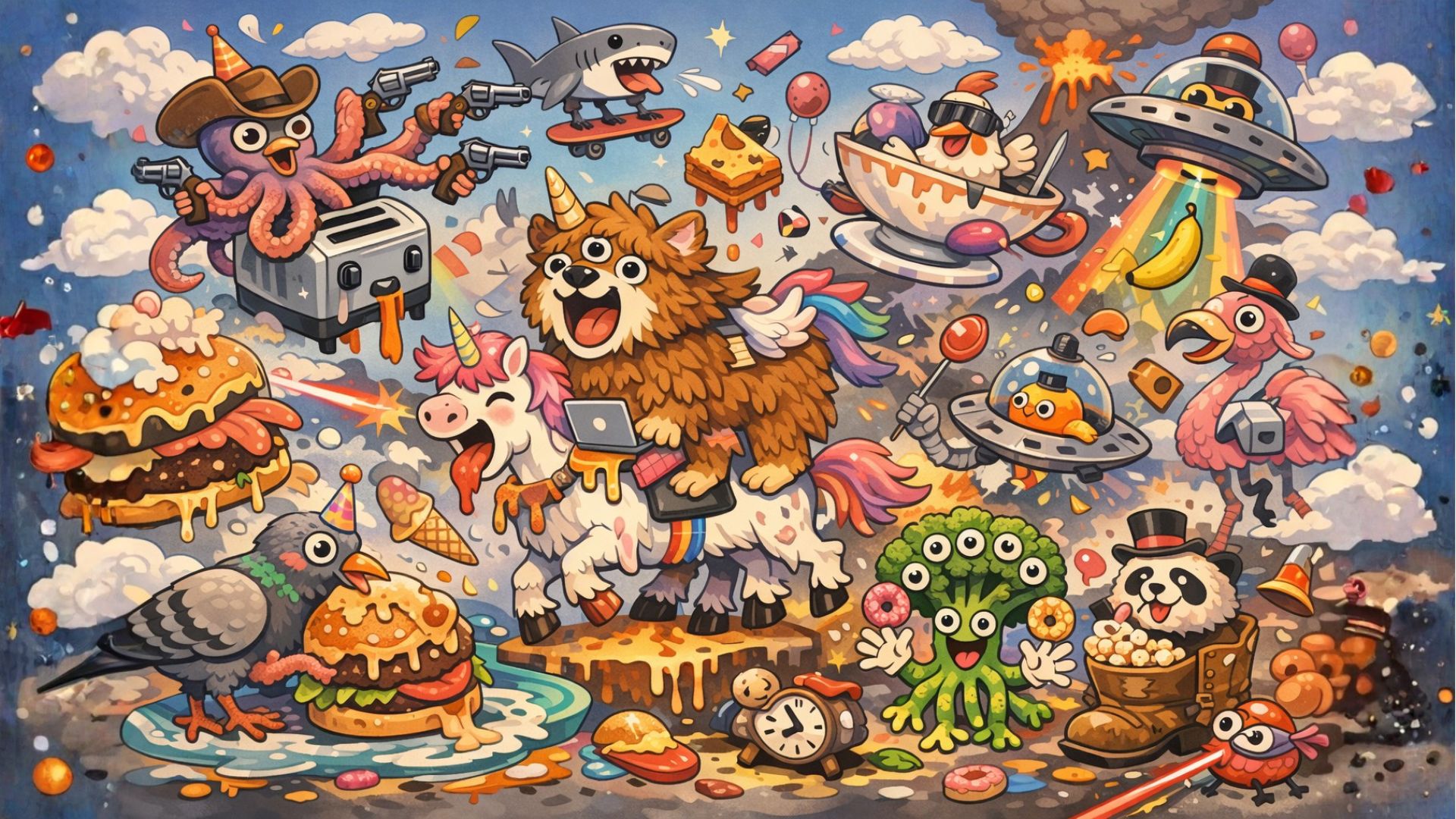
AI videos and slop are now everywhere (even on official government accounts, which is CRAZY if you ask us), and we are facing a time when that slop is competing with our content… and then comes the question:
How do we break the AI slop noise?
The Rise of AI Content
Let me start this by being extremely clear: we, as an agency, are NOT against AI (to a degree). AI is a great tool and, when used properly, can enhance your creativity, help you be more productive, and, overall, take your business to the next level; now, this does not mean you should 100% leave all of your business to AI…
And that applies to your content creation too!
Part of the reason AI slop has become so widespread is that it works, at least on the surface.
It’s fast, inexpensive, and makes it easy to keep up with the constant demand for content. For businesses already stretched thin, that kind of efficiency is hard to ignore. In some cases, it even delivers short-term engagement.
Why “AI Slop” Is So Risky
The problem with AI Slop isn’t just that it’s fake, cuz let’s be honest, some of those videos are hilarious and even fun to watch every now and then… the problem with it is that it’s empty. One can have all the fun with the AI videos and other slop, but that kind of content isn’t created for you to connect with; it’s designed to trigger an algorithm rather than a human emotion. That tornado video, or the one of the Emotional Support Kangaroo that was denied boarding, are situations in which neither you nor I will ever imagine ourselves… and, as a brand, your goal is to provide proof of life, and for your clients to look at your feed and feel connected.
Besides the overproduction and the lack of substance in AI content, the lack of regulation can lead to AI being used to deceive audiences (there was already a case in Panama where an event organizer used AI to generate a video used in advertising that was deceitful and for which they were sanctioned), and even to paint a version of reality that is not quite right, and here’s where things get more serious.
When AI-generated content starts blending in with real content, you don’t just lose originality, but also trust. And trust is the foundation of any effective marketing strategy.
If your audience begins to question whether what they’re seeing is real, staged, or entirely fabricated, they’re more likely to disengage. They scroll past, stop interacting, and eventually stop paying attention altogether. And honestly, that reaction makes sense.
Audiences are more aware and selective. The novelty of AI-generated content is fading, and in its place is a much more important question: can this brand be trusted? Over-reliance on AI-generated content removes the very thing that differentiates your brand: your perspective, your experience, and your voice.
When your content starts to feel interchangeable with everything else online, you lose the ability to stand out. And if your audience can’t distinguish you from the noise, they have no reason to choose you.
Staying Human: What “Human Content” Actually Looks Like
Bringing the human element back into your content doesn’t mean abandoning AI altogether. It means using it intentionally, rather than letting it dictate your output: human content is grounded in real experiences, clear opinions, and a sense of personality. It reflects how you think, how you communicate, and how you approach your work.
This can take many forms. It might be sharing a recent client interaction and what you learned from it, walking your audience through your decision-making process, or offering a perspective that challenges common industry advice. It can also be as simple as showing behind-the-scenes moments that reveal how your business actually operates, and even telling you a story of how I get bubble tea every Tuesday with the kiddo.
The key difference is specificity. Generic content provides information; human content creates connection.
Before publishing anything, it’s worth taking a step back and asking a few simple questions. Does this sound like something you would actually say? Is there a real perspective behind it? Does it reflect your experience, or could it belong to anyone?
If the content feels generic or detached, it likely needs more of your input. Your insights, your tone, and your context are what transform content from passable to effective.
How Do I Break Through the AI Slop Noise?
For starters, do not over-rely on AI 🙂
Competing with AI-generated content isn’t about producing more. It’s about producing better: it’s about producing content that feels real. Content that is rooted in actual experiences, communicates a clear point of view, and speaks directly to a specific audience. Being yourself (even if you are cray-cray just like us) is a competitive advantage.
The brands that will stand out are the ones that prioritize connection over volume and substance over speed. AI is great at creating “perfect” images, but it struggles with the messy reality of a Tuesday afternoon. Instead:
- Stop trying to make your brand look like a stock photo. Post the blurry behind-the-scenes shot, the “desk tour” that hasn’t been cleaned, or the video of you explaining a concept while walking to get that bubble tea. People trust “raw” because “raw” is hard to fake.
- Take a stand. Share a hot take or a unique methodology that is specific to you and your business. Don’t just say “SEO is important.” Say, “I watched a client lose 40% of their traffic because they relied on AI-written blogs, and here is why I’ll never let that happen to you.” Specificity is the kryptonite of AI slop.
- And most importantly: ground your content in your actual community and life. Reference your local coffee shop, a specific conversation you had with a client this morning, or even your latest Pokémon GO catch (yeah, I have probably mentioned Pokémon GO too many times in this article… Time for Niantic to sponsor us, LOL). These “useless” details are actually the most valuable trust signals you have.
Find The Sweet Spot: the “Golden Ratio”
Again, I am not saying you should throw AI in the trash. It’s a teammate, not the captain. Use it to outline your ideas or brainstorm headlines, but never let it have the final word.
Think of AI like a calculator. It can do the math, but it doesn’t know why you’re building the bridge. Your job, and the secret to beating the slop, is to keep reminding your audience why you’re building it in the first place. AI-generated content will continue to grow, and in many ways, it will continue to improve. But no matter how advanced it becomes, it cannot replicate lived experience or genuine human connection.
That is where your advantage lies.