
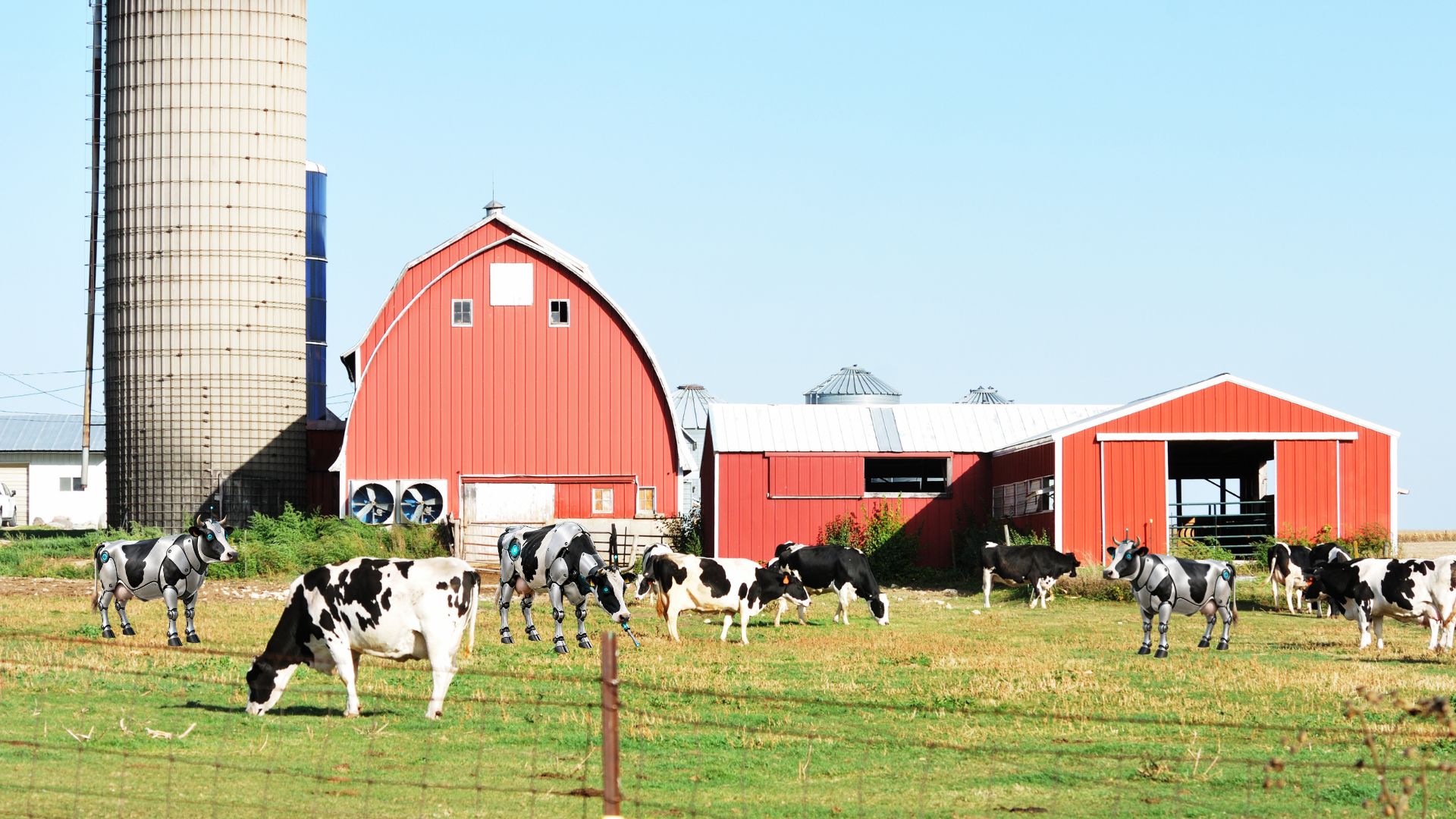

A couple of days ago, the internet had a break. Due to certain world events, a couple of bot farms went offline (allegedly), and the internet exploded with “bot tests,” posts, usage data analysis, and conspiracy theories… And honestly, we believe it is important to talk not only about the “bot outage” but also about the effects bots have on social media.
Because yes, bot accounts do influence social media and the way we live.
What is a Bot?
Ok, we are not saying you don’t know what a bot is, but it is always good to start any discussion by clarifying exactly what we are talking about.
While the concept of “bot” comes from the word “robot,” we are not talking about a humanoid-like thing typing on a keyboard or performing physical actions, but about an automation. A bot is an automated software application or computer program that runs predefined tasks over a network or the internet much faster than a human can… think of it as an LLM (ChatGPT, Claude, Gemini, etc.) or as one of those literal virtual assistants (like Siri): something that exists in the cloud, on a server rather than physically, and that was designed for specific tasks…
…and a lot of times, those tasks involve the internet.
The Bots of the Internet
There is this theory that says that most traffic on the internet comes from bots… and while it might sound like a conspiracy theory, there is data that can back that up: Cloudflare does have an active tracker of Bot vs. Human traffic that, at the moment this article was written, showed 65.3% of the traffic on the internet comes from bots… And that is a lot.
Anyway, there is an important clarification to make here: this does not mean that 65% of the comments or interactions on the internet are bots, as there are many different kinds of bots. A bot can be a helpful tool or a nuisance, and the line between the two comes down to permission and intent rather than the technology itself. Good bots work within a site’s rules, while bad bots ignore those rules and pursue goals the owner never approved.
Web crawlers, chatbots, data scrapers, social media bots (our favorite, right?), spam bots, ad fraud bots, gaming bots… Notice how different these jobs are: a crawler indexing your blog and a fake account pushing a hashtag are both “bot traffic” in a chart, yet they have almost nothing in common… and that is exactly why a single number like 65.3% needs some care when we read it.
And the same happens when we talk about “the bots going out.”
How Bots Shape Social Media
Let’s focus for a second on social media bots. We have all seen those pesky accounts, and it’s true that they influence social media and the way we live, but how much is something researchers still argue about.
Some studies find a strong connection. One analysis of a heated online debate found a strong interplay between social bots and users engaging with unreliable content, which affected how far that content spread. Part of the reason is how platforms work: bots can spread false content quickly by exploiting algorithms that prioritize engagement and by leveraging the network’s structure to gain visibility. Fake accounts that inflate followers, likes, or engagement can also distort how popular or trustworthy something looks.
Other studies point the opposite way. Researchers at Edinburgh looked at more than 4,000 Twitter (X) users and their interactions with over 19 million accounts, and found that bots were only weakly related to users’ stances on contentious topics, while influencers and celebrities had the greatest impact. A separate study of 5.8 million COVID-19 vaccine tweets found that human-generated misinformation tended to have higher appeal and scope than bot-generated misinformation.
So bots can make something look bigger than it is, and sometimes they give it a push, but people do a lot of the sharing themselves.
Back to the Bot Outage: What Actually Went Offline?
The story got a lot more interesting once people started looking at the numbers.
As reported by Tech Insider, Cloudflare data showed that automated traffic from Yandex’s network (a huge Russian tech company, sort of like their version of Google) fell to roughly 57% of its two-week peak after damage was reported at data centers in Sasovo, Vladimir, and Kaluga, and then to just 0.4% as more outages followed. So yes, the drop is real and dramatic.
The internet jumped to the conclusion that social media bot farms had been switched off. But tech experts pointed out that the bots taken offline were most likely web crawlers, the programs that constantly browse the internet to index pages. Yes, they are bots, but they are not the accounts arguing with you in the comments.
The people who track this kind of thing, on the other hand, decided to be more cautious: while the data showed a clear decline in bot traffic, there is no solid evidence that bot farms have gone inactive, though they did not rule out an effect either. And the Cloudflare chart does not show how much traffic moves across a country or how many messages are posted on any particular social network.
So, did social media get quieter? Plenty of people said so. Did anyone prove the two things are connected? Not yet.
Is the Internet Alive? Why We See Bots Everywhere?
The idea of an “alive” internet comes from the Dead Internet Theory, which holds that online content, including on social media, is mostly produced by AI and bots rather than humans (and yes, this is from even before the boom of AI content and AI slop). It gained traction on online forums, and as of now it is still just a theory. And we can confirm that not every interaction we have online is fake, even when some feel that way.
Still, it is easy to see why it sticks. Researcher Renee DiResta, who studies disinformation, says we live in an environment where people are increasingly suspicious of artificial participation, even as we are increasingly unable to measure it… and we are not great at telling the difference (even if we believe we are). A 2023 Indiana University study found that people tend to overestimate how many bots are out there, and to see others as more vulnerable to bot influence than themselves. The researchers also pointed out that people use the word “bot” to refer to everything from fake profiles and spammers to fully automated accounts, which makes it easy to blame bots for an unpleasant experience or to label accounts with opposing views as bots.
That might explain why the “bot outage” spread so fast: people are tired of suspected manipulation. We already suspected bots were everywhere, so a story about them going quiet was easy to believe… and even kind of something we all wanted.
Anyway, the reality is we still can’t measure well how many of the accounts in our feeds are real, and that gap is where theories (and “bot tests”) thrive. The research we looked at says bots can make things look bigger than they are, while real people still do a lot of the talking themselves, even as they’re accused of being bots…
…and from our perspective, the internet is pretty alive, just with a lot more automation running underneath than we can see.