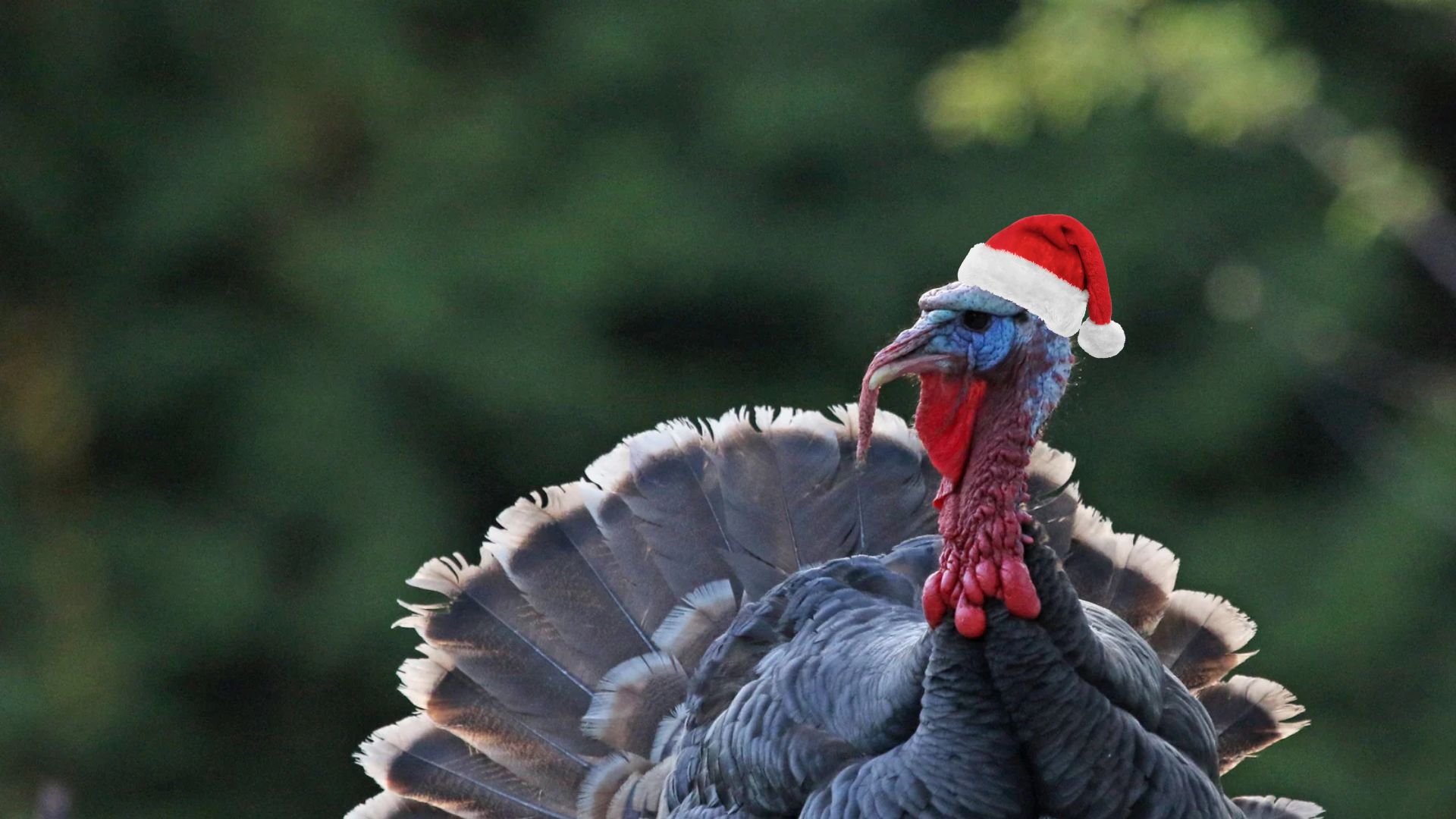

Tomorrow is Thanksgiving… and that means it is already that time of year when businesses remember that Canva has a lot of templates, and every other post will have a Turkey, a Christmas Gift, or best wishes for the new year…
…and yes, probably there will be AI holiday posts too.
And we are not saying the holidays are bad or that holiday content is bad… we are just saying you do not have to go with the standard and post for posting just because it is the holidays.
The Real Holiday Numbers
Shockingly to nobody, during the holidays, social media traffic is not your regular traffic: it’s bigger in some ways, smaller in others, and it definitely behaves differently than it does on a regular Tuesday in the middle of the spring.
The shopping mindset is on the rise, and social media is becoming a place to browse rather than just a place to post memes. Adobe’s analysis of the 2025 holiday season found that social media’s share of online holiday revenue hit 4.6%, up 40.3% from the year before. Adobe also notes that consumers are increasingly turning to social media to discover and learn about new products. Cyber Week alone (Thanksgiving through Cyber Monday) generated $44.2 billion in online sales, up 7.7%. Attention is high.
Another point: social is where people discover, but not necessarily where they decide to buy. Adobe describes social’s role as driving discovery, early-stage exploration, and inspiration. Visitors arriving from AI search tools, meanwhile, converted nine times more often than those arriving from social referrals. People may see you on social media, but they often buy after looking elsewhere.
The traffic also disappears at the moments you’d expect. Cloudflare’s data shows that, globally, December 25 saw a 19% drop in traffic from the previous week, and December 24 a 14% drop. In Europe, Christmas Eve drops reached 67% in Denmark and 66% in Spain. Thanksgiving works the same way. Cloudflare measured a 10% drop in overall U.S. traffic on the day, and a 22% drop at the peak hour, around 4:00 PM Eastern. That 22% drop is measured against the previous week, so when you post that “Happy Thanksgiving!” graphic at 4 PM, a good share of your audience is at the table.
And the spike comes right after. Akamai saw that after 7:00 PM ET on Thanksgiving, ecommerce traffic rose rather than fell, reaching 57% above typical levels on Black Friday and 48% above on Cyber Monday.
So What Does This Mean For Your Business?
Well, for once, that YES, you should be around to a degree during the holidays, as attention isn’t missing then. People are offline when you’re posting your greeting and back online, wallet in hand, once dinner is over.
And that matters a lot: because everyone is fighting for that second window with the same turkey graphic.
And we are not saying it is bad to post a “Happy Thanksgiving” or any other holiday post your heart desires, but as with everything you post, there has to be a reason behind it. A post that exists only because it’s the holidays, or just to fill a hole in your calendar, will not bring you the results you think it will.
Instead, focus your holiday content to be helpful. Post the thing that helps someone about to shop, such as shipping cutoffs, a gift guide that solves a real problem, an answer to a question your customers always ask, or an offer with a clear deadline. If you want to say thank you, say it in a way that sounds like your business, not a template.
You don’t have to disappear, and you don’t have to post filler either.
Drop The Canva Template: Examples
Now, let’s start this section with a disclaimer: yes, these are big companies, but that does not mean they are the only ones that can do this. You don’t need a Fortune 500 budget to skip the template. These brands each did something different on the holidays, and none of them was a turkey graphic.
REI: Closing the Doors
REI’s #OptOutside is probably the best-known example. REI is giving 12,000 employees a paid day off on Friday, November 27, and closing all stores, distribution centers, call centers, and headquarters. Online orders still come in, but fulfillment resumes the next day.
And this is not new. REI has been doing this since 2015, and made it a permanent policy in 2022. While uncommon for a campaign, it works because there’s a real action behind the message. And it didn’t hurt business. GeekWire reported that after the second year, REI saw a 36% spike in online traffic.
Butterball: Being Useful at The Moment People Panic
Let’s be real: do you know how to cook a turkey? Cuz we didn’t. Our first Thanksgiving in the U.S. was us, a 12-lb turkey, and our phone, trying to figure out how not to give anyone food poisoning.
Butterball knows this. Butterball knows there are people out there who have no idea how long to cook a turkey, and who would love a real human to guide them rather than search online for an answer… and this fact made them skip the “Happy Thanksgiving” post and start a Turkey Talk-Line that has run since 1981, with more than 50 experts, available through December 24. People can reach them by phone, text, social media, email, and live chat.
Butterball’s site says the line gets more than 10,000 inquiries on Thanksgiving alone. It has also gone where the audience is, with a test kitchen exclusively for TikTok. Their holiday content answers the question people are actually asking that day.
Cards Against Humanity: Jokes in Your Own Voice
The game company has used Black Friday for pranks for years, including raising prices and once selling “nothing” for $5. It only works because it sounds like them, so don’t copy it if your brand isn’t that kind of funny.
None of these brands went with your regular “Happy Holidays” nor asked, “what do people post?” Instead, they tackled a customers need, leaned on what they believe, and said what their audiences sometimes won’t say. And that’s what makes their approach work: it is centered on their audience.
“Happy Holidays”
Tomorrow your feed will fill up with turkeys, pumpkins, and “so grateful for you” graphics, and most of them will be forgotten before the pie is gone.
Having a reason to post, solving a problem, or leaning on a belief will have far more impact than any generic post could. So before you schedule anything this holiday season, ask yourself three things:
- Does this help someone? An answer, a deadline, or a shortcut counts.
- Does this sound like us? If you could swap in any other brand’s logo and nothing changed, it doesn’t.
- Would anyone notice if we didn’t post it? If not, skip it. A quiet feed beats a forgettable one.
And if you still want to post that “Happy Thanksgiving,” go for it. Just mean it, and make sure it has something only you could say.