
Well, well, well… this article is going to be full of crazy things: from PETA doing something that helps us all (shocking, I know…) to a macaque named after an anime character technically winning a lawsuit he did not start…
Sit down, grab a coffee, and let’s get to it!
Just a disclaimer before we dive in: this is not legal advice in any way, shape, or form. This article was written more as a marketing opinion rather than for legal guidance. If you need assistance with any legal matters, including copyright, please reach out to a lawyer.
The First Copyright Nightmare: Naruto the Macaque
I am not sure how you feel about PETA, but, honestly, they are kind of one of those organizations we’d rather not bring up, as they can be pretty controversial in their takes… the kind of organization that makes you roll your eyes even when they’re technically right… and they are kind of the start of our story here. Well, at least one of their crazy takes is.
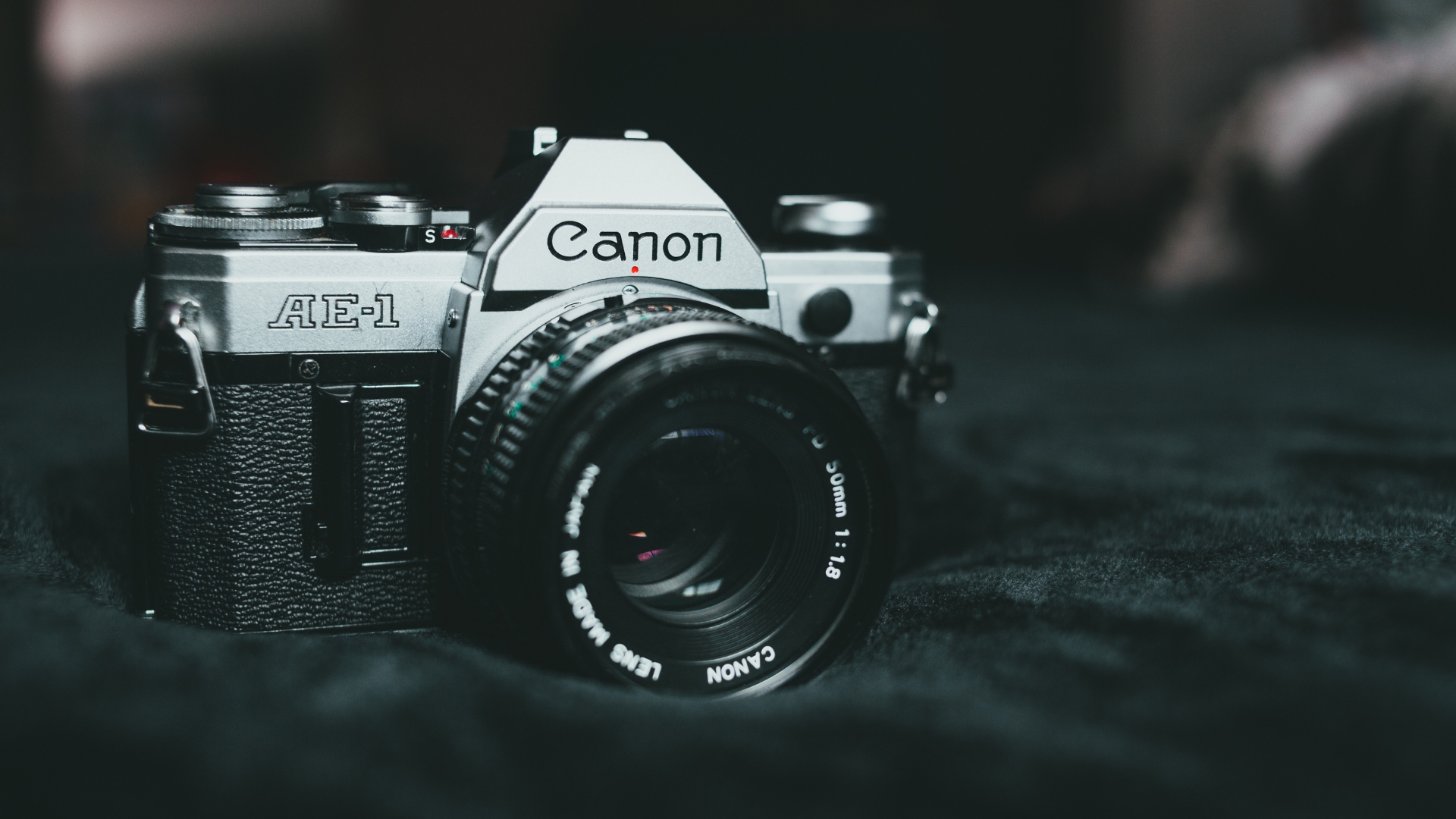
Back in 2011, a macaque in the middle of Indonesia (there seems to be no certainty if it was Naruto, a male macaque, or Ella, a female macaque who took the selfie, but just because of anime, we will assume it was Naruto the Macaque) found himself in front of a weird artifact… a camera… a wildlife photographer’s camera, to be exact. And well, you and I know that primates are pretty smart and somehow, he managed to snap a picture of himself, giving us the first in history “monkey selfie.”
Up to that point, this story is fun and wholesome, right? Imagine being the photographer and finding this in your pictures:
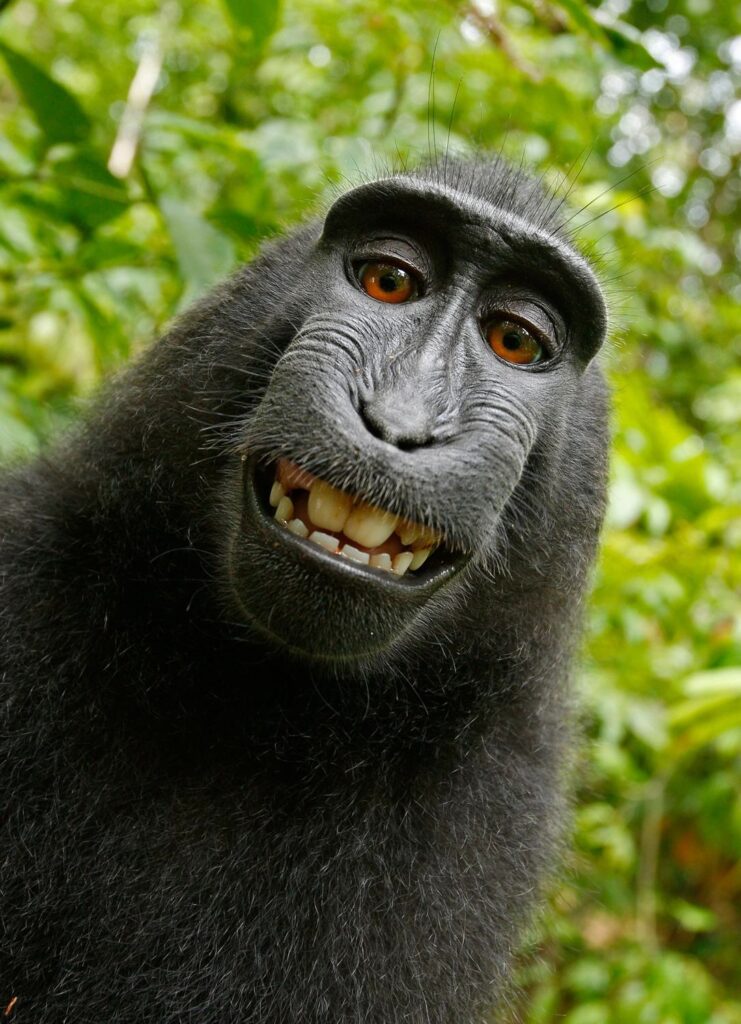
Cutesy. Probably prize-worthy. Valuable. He imagined it on magazine covers, in galleries… so he sent the pic along with others taken during the same session to his agent, who then circulated them to news outlets. It was first picked up and published by the Daily Mail, and, as you can imagine, the picture went CRAZY VIRAL… and, well, virality has a cost.
Here is where the first issue arose: in 2014, Wikipedia, the online encyclopedia, uploaded the picture and tagged it as being in the public domain, reasoning that monkeys cannot own copyright, and as much as David tried to get the picture removed, Wikipedia ignored the request, listing the monkey selfie as public domain material to this date.
All that media attention might have caught PETA’s attention as they decided to sue David on Naruto’s behalf in 2015, arguing that, since it was a selfie, Naruto should legally own the copyright to the image. Yes, PETA wanted to give copyrights to a macaque… anyway, at the end of the day, U.S. courts ruled that animals cannot hold copyright ownership… and while David was not able to hold the rights over the picture as he was not really involved in its creation (his equipment, yes, but he did not take it), it is worth noting that the case was actually settled in 2017 — Slater agreed to donate 25% of future proceeds from the image to charities protecting Naruto’s habitat.
What Does This Have to Do With “AI Art”?
Well, funnily enough, one of the conclusions from the monkey selfie case was that things created by non-humans cannot be copyrighted. Key factor here: non-human. And while at the time we were talking about a primate, this does apply to AI also…
A similar lawsuit has been brought by a computer scientist named Stephen Thaler, but now due to an AI model… it all started back in 2018 when Thaler applied for a federal copyright registration for “A Recent Entrance to Paradise,” a piece of visual art that was autonomously created by his DABUS AI software. The AI software is listed as the author of the work, which prompted the U.S. Copyright Office to reject the application in 2022, finding that copyrightable creative works require human authors.
Thaler attempted to change that decision by appealing it in federal court, but the U.S. District Court for the District of Columbia affirmed the Copyright Office’s rejection. The District Court basically said that human authorship is a “bedrock requirement of copyright.”
This decision was appealed, and the appeal failed… and Thaler even tried to take it to the Supreme Court, which refused to hear it, making the decision final: you cannot copyright AI work due to the same reason a macaque cannot own copyright… they are not human.
Does This Mean We Are SAFE from “AI Art”?
Probably not. “AI Art” and AI slop will continue to exist…
But here is the important nuance that many people miss: the copyright question is not really about whether AI-generated content exists but about who, if anyone, owns it.
And the answer right now is: probably nobody. Or, more precisely, it depends on how much of a human hand was involved.
The U.S. Copyright Office has been quietly working through this exact question. In 2023, they issued guidance stating that AI-generated content, on its own, is not copyrightable, but that works combining human creative choices with AI assistance can be, depending on the level of human control involved. Think of it like a spectrum: a prompt that spits out a finished image with no further editing sits at one end; an artist who uses AI as one tool among many (selecting, arranging, modifying, and making deliberate creative decisions) sits at the other.
So What Does That Mean Practically?
If you generate an image using any AI tool and drop it into your blog post, nobody owns that image. Anyone can use it, including your competitors and people you really do not want using it.
If you are building a brand, creating marketing materials, or producing anything you want to protect, this matters enormously. The safer play is to ensure a real human is making meaningful creative decisions along the way, not just typing a prompt and hitting enter.
The irony, of course, is that the monkey selfie and the DABUS case point in exactly the same direction: copyright exists to incentivize human creativity. The moment you remove the human from the equation, whether you replace them with a macaque or a machine, the law, at least for now, steps back and says: “That’s not ours to protect.”
Whether that remains the case as AI gets more sophisticated is another question entirely, and one that courts, lawmakers, and the Copyright Office will be wrestling with for years to come. But for now, the rule is simple: no human, no copyright. And that has implications for everyone creating content in 2026, whether they are using AI or not.